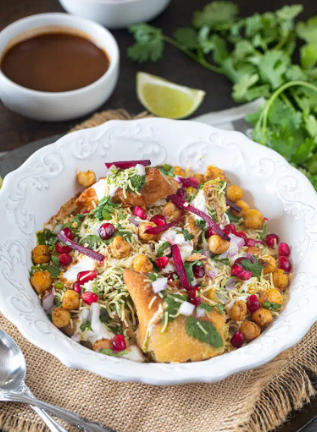

Salmon Patties Recipe
Salmon patties are an easy, comforting homemade meal made with smooth salmon, breadcrumbs, egg, clean greens, and flavorful seasonings. The mixture is formed into small patties and pan-fried until the outside turns golden and lightly crisp while the inside stays smooth and flavorful. This recipe is particularly useful while you want a quick meal using pantry-friendly ingredients. Serve the patties with tartar sauce, lemon wedges, a clean salad, or your favored greens for a smooth lunch or dinner.
Why This Recipe Works
This recipe works because every step solves a specific problem I’ve encountered over thirty-odd batches. The twenty-minute onion sauté builds a sweet, jammy basis that uncooked or rushed onions simply cannot deliver. Panko breadcrumbs create shape without density; fine crumbs turn the interior to paste, but panko’s flakes leave tiny air pockets that hold each bite light. Chilling the formed patties for thirty minutes lets the crumbs hydrate and the egg set; that’s the single biggest factor in whether they hold together or surrender to the oil. Two eggs and three tablespoons of mayo provide enough binding without making the mixture wet.
The splash of hot sauce adds a vinegary backbone that cuts richness without announcing itself as heat. Pan-frying in a generous oil film at medium heat – no longer high, no longer low – offers you that shatter-crisp crust without burning before the middle warms through. each element earned its location through failure
How to Choose the Best Salmon
Standing in the canned fish aisle, you’ll see pink, red (sockeye), and sometimes king (chinook). Pink is the most affordable, mild, light-colored, and perfectly serviceable for weekly dinners. Sockeye brings deeper color, firmer texture, and that unmistakable wild salmon richness that makes the patties taste like something from a coastal shack. King is buttery and luxurious but often triple the price; I save it for occasions. Wild-caught matters more than variety — the flavor is cleaner, less metallic. Check the ingredient list: salmon, salt, maybe water. Nothing else. Avoid “skinless and boneless” claims that come with a texture like mush; the skin and soft bones add flavor and calcium, and picking them out takes forty seconds. My go-to is wild pink salmon for everyday and sockeye when I want to feel fancy.
How to Make Salmon Patties Step by Step
Step 1: Prepare the salmon:
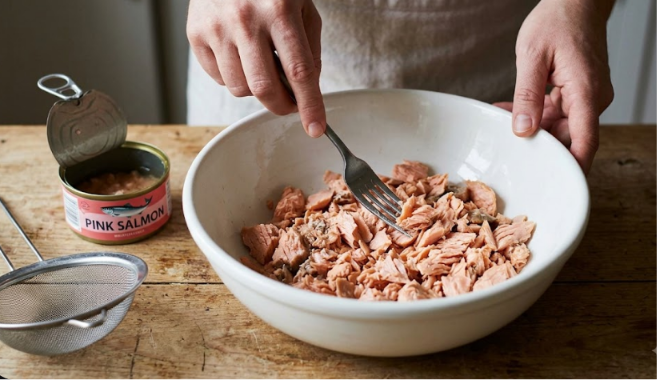
Drain the canned salmon very well and place it in a big bowl. Remove any bones or skin if wanted, then gently flake the salmon with a fork.
Step 2: Cook the veggies:
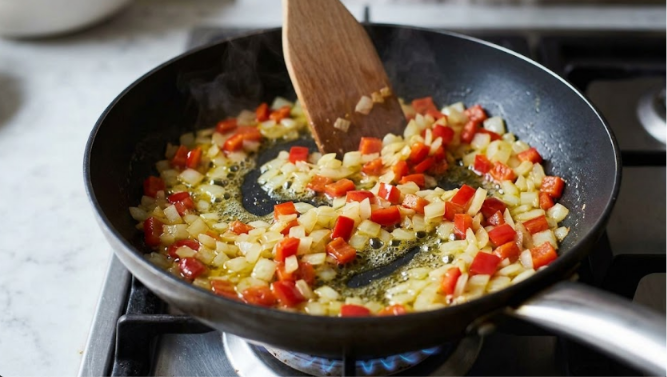
With warm olive oil and butter in a skillet over medium warmth. Add the finely diced onion and red bell pepper. Cook until the veggies become soft and gently golden, then take them off from the warmth and let them cool slightly.
Step 3: Blend the ingredients:
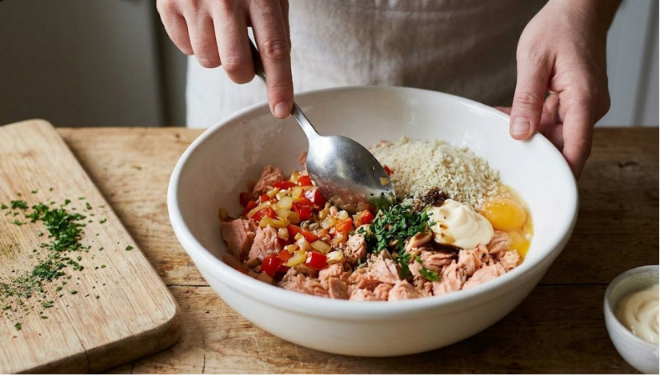
Add the cooked veggies, panko breadcrumbs, crushed egg, mayonnaise, Worcestershire sauce, garlic salt, black pepper, and chopped parsley to the salmon. Gently blend everything until properly blended.
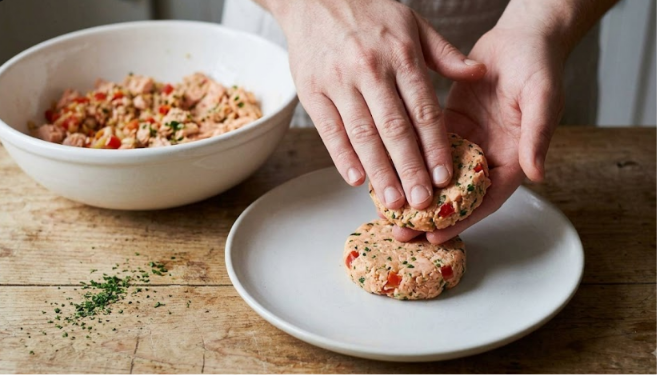
Step 4: Shape the Patties:
Take quantities of the salmon combination and gently shape them into small, round patties. Hold them about 2 inches wide and kind of ⅓ to ½ inch thick in order that they cook lightly.
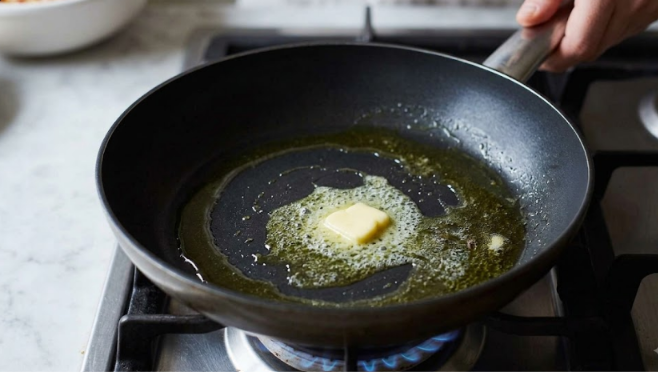
Step 5: Warm the skillet:
Place a nonstick skillet over medium heat and add a bit of olive oil and butter. Allow the pan to become warm earlier than adding the patties.
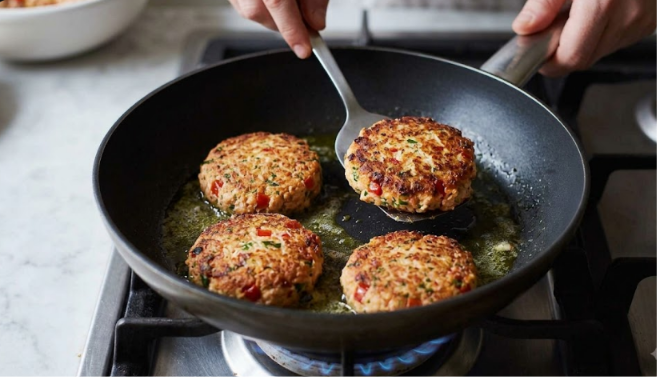
Step 6: Cook the salmon patties:
Carefully place the patties inside the warm skillet without overcrowding the pan. Cook for about 3 to 4 minutes on each side, or until golden brown and heated through.
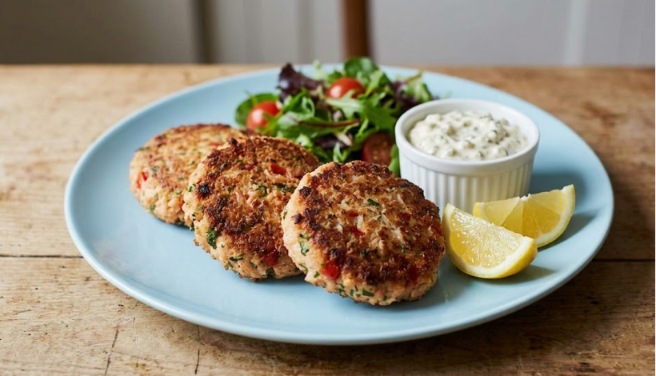
Step 7: Drain and Serve:
Switch the cooked salmon patties to a paper towel-covered plate to soak up excess oil. Serve warm with tartar sauce, lemon wedges, salad, or your favored side dish.
How to Shape Perfect Salmon Patties
Form eight patties – not six hulking ones that burn outside before the center warms, not twelve bite-sized ones that disappear in two mouthfuls. Three inches across and three-quarters of an inch thick feels right for even cooking. Press a gentle dimple in the center of each with your thumb; this prevents the patty from puffing into a meatball as the edges contract in hot oil. Place them on a parchment-lined plate, not touching. Here’s the step everyone skips: refrigerate uncovered for a minimum of thirty minutes, or an hour if you can. The crumbs need to hydrate, the egg needs to set, and the flavors need to marry. Cold patties hold their seams. Warm patties fall apart and blame you. I’ve learned this the expensive way.
How to Pan-Fry Salmon Patties
Heavy skillet – cast iron if you have it, stainless if you don’t. Heat three tablespoons of neutral oil (vegetable, canola, or grapeseed) over medium heat. The oil should shimmer, not smoke. Test with a pinch of panko: immediate, gentle sizzle means you’re ready. Two patties at a time, three maximum. Crowding drops the temperature, and dead temperature means greasy, gray patties. Lay them in gently, presentation-side down. Four minutes. Do not touch. Do not peek. Do not nudge. The edges will climb, browning into delicate lace frills. Flip once with a thin metal spatula – one confident motion. Three minutes on side two. The second side never looks as pretty. That’s fine; the pretty side faces up on the plate.
How to Know When Salmon Patties Are Done
Since the salmon is already cooked, you’re not chasing a safety temperature—you’re chasing crust and warmth. The patties are done when both sides are deep golden-brown, the edges are lace-crisp, and the center feels hot when you press gently (it should spring back with slight resistance). An instant-read thermometer inserted into the center should read 145°F, but honestly? Your eyes and fingers are better guides. If the crust is burning before the center warms, your heat is too high — drop it to medium-low and add a minute per side. If they’re pale after four minutes, the oil wasn’t hot enough. Trust the visual cues: gold lace edges, firm spring, steam rising when you flip.
Tips for Extra Crispy Salmon Patties
Panko is non-negotiable—fine crumbs absorb oil and turn soggy. Pat the formed patties dry with a paper towel before they hit the oil; surface moisture is the enemy of crust. Oil temperature matters more than you think: too cool and they absorb grease; too hot and they burn before the center warms up. That shimmer-not-smoke test with a pinch of panko saves guesswork. Don’t crowd the pan – two patties, maybe three, never four. Crowding drops temperature instantly. Let the first side develop undisturbed for four full minutes; that crust is structural. Drain on a wire rack, not paper towels. Paper traps steam, and steam turns crisp to soggy in seconds. Salt them the second they hit the rack – flaky sea salt dissolves into the crust, not the interior.
Salmon Patties Recipe variations
Cheesy Salmon Patties: Add a small amount of shredded cheddar or Parmesan cheese to the salmon mixture for a richer, greater savory taste.
Highly spiced salmon patties: mix in finely chopped jalapeño, red pepper flakes, or a little hot sauce for extra warmth. Herb Salmon Patties: Add fresh dill, chives, or extra parsley to present the patties a brighter, fresher taste.
Lemon Garlic Salmon Patties: Add a touch of fresh lemon zest, lemon juice, and minced garlic to create a fresh and zesty version.
Gluten-Free Salmon Patties: Replace normal panko breadcrumbs with gluten-free breadcrumbs to make the recipe suitable for a gluten-free diet.
Air Fryer Salmon Patties: Shape the patties as ordinary, lightly brush them with oil, and cook them in a preheated air fryer till golden and cooked through, turning them midway for even browning.
What to Serve With Salmon Patties
Simple salad: arugula, lemon juice, olive oil, flaky salt. The peppery bite cuts the richness perfectly. Roasted broccoli or asparagus when the oven’s already hot. Buttered green peas – sweet, bright, and ready in three minutes when frozen. Thick tomato slices in August, just salted. Creamy coleslaw for crunch and acid. Rice pilaf or quinoa if you need starch. Crusty bread to mop up sauce and catch crumbs. For breakfast: English muffin, fried egg, hot sauce. For lunch: crumbled over greens with ranch. The patties are versatile enough to anchor a proper dinner or slide into a sandwich. Build the plate around what’s in season and what you have energy for.
Read: Classic tuna salad

Salmon Patties Recipe
Course: American, Homemade receipe, Lunch6
servings20
minutes30
minutes250
kcalIngredients
Canned salmon – 14 to 15 oz
Olive oil – 1 tbsp
Unsalted butter – 1 tbsp
Yellow onion – 1 medium
Red bell pepper – ½
Panko breadcrumbs – ½ cup
Large egg – 1
Mayonnaise – 2 tbsp
Worcestershire sauce – 1 tsp
Garlic salt – ½ tsp
Black pepper – ¼ tsp
Fresh parsley – ¼ cup, chopped
Directions
- Drain the canned salmon well and flake it into a large mixing bowl.
- Heat olive oil and butter in a skillet over medium heat.
- Add diced onion and red bell pepper and cook until soft and lightly golden.
- Let the cooked vegetables cool slightly.
- Add the vegetables, panko breadcrumbs, egg, mayonnaise, Worcestershire sauce, garlic salt, black pepper, and parsley to the salmon.
- Gently mix everything until evenly combined.
- Shape the mixture into small, round patties about 2 inches wide.
- Heat a little oil and butter in a nonstick skillet over medium heat.
- Place the salmon patties in the skillet without overcrowding.
- Cook for 3–4 minutes on each side until golden brown and heated through.
- Transfer the cooked patties to a paper towel-lined plate.
- Serve warm with tartar sauce, lemon wedges, salad, or your favorite side dish.
Notes
- Drain the salmon well to prevent the patties from becoming too soft. Do not overcrowd the skillet, and flip the patties gently to keep them intact.
How to Store Salmon Patties
Cooked patties hold for 3 days in an airtight container with parchment between layers—it prevents sticking and preserves crust integrity. Cool completely before refrigerating; hot patties create condensation, and condensation kills texture. Raw formed patties maintain for 24 hours inside the refrigerator on a parchment plate, exposed. Beyond that, freeze them. I don’t recommend storing cooked patties longer than three days – the fish flavor intensifies in ways nobody enjoys. If you’ve made a double batch, freeze half raw before cooking. Much better than reheating four-day-old patties.
More recipe: Broccoli cheese soup recipe